

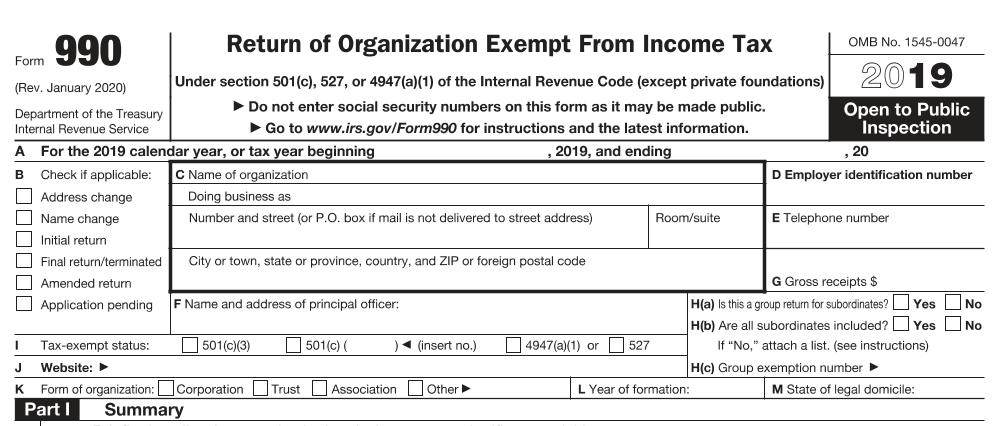
Section 6033 of the Internal Revenue Code (IRS) requires most tax-exempt entities under Section 501(a) to submit an annual return. Depending on operational scale, this typically means submitting Form 990, Form 990-EZ, or Form 990-N (the “e-postcard” for smaller groups). Meanwhile, private nonprofit foundations must file Form 990-PF regardless of revenue.
Skip this critical obligation for three consecutive years, and the IRS automatically revokes your exemption by operation of law.There is no warning notice and no preliminary hearing.The organization simply discovers it has lost its status, usually when applying for a major grant or handling financial disclosures.
However, specific legal exceptions exist under Section 6033(a)(3). Knowing whether your organization qualifies can save you from administrative headaches, while misunderstanding these exemptions can trigger severe financial consequences.
1. Mandatory Legal Exemptions Under Section 6033
The tax code explicitly relieves several specific categories of non-profit organizations from filing Form 990 information returns.
- Churches and Religious Organizations: Churches, synagogues, mosques, associations of churches, and integrated auxiliaries (such as church-run seminaries or men’s/women’s groups) do not have to file Form 990.
- Religious Orders: Monasteries, convents, or orders engaged exclusively in religious activity are exempt.
- Church-Affiliated Schools: Primary and secondary schools directly controlled by or affiliated with a church or religious order fall under this protection.
- Governmental Instrumentality:State and municipal entities, as well as organizations whose income is excluded under IRC Section 115 or classified as state instrumentality, are generally excused from federal return requirements.
- Corporations Formed by Act of Congress: Instrumentality created directly by federal statute under IRC Section 501(c)(1) are exempt unless specified otherwise.
2. Standard Form 990 Filing Tiers
For entities that do not qualify for an explicit statutory exemption, filing requirements are determined by annual gross receipts and total assets.
| Organization Threshold | Required IRS Form | Key Features |
| Gross Receipts $\le$ $50,000 | Form 990-N (e-Postcard) | Minimal electronic filing requiring basic organization verification. |
| Gross Receipts < $200,000 & Assets < $500,000 | Form 990-EZ | Abbreviated return summarizing income, expenses, and balance sheets. |
| Gross Receipts $\ge$ $200,000 or Assets $\ge$ $500,000 | Form 990 | Comprehensive financial and operational return. |
| Private Foundations (Any Size) | Form 990-PF | Detailed disclosure of investments, grants, and excise tax calculations. |
3. The High Cost of Misinterpreting Exemptions
In addition to operational confusion, assuming your organization is exempt when it is not creates legal and financial risk.In contrast to standard filing errors that trigger late fees, missing filings for three straight years triggers an automatic, non-negotiable revocation of tax-exempt status.
Ultimately, automatic revocation causes immediate operational disruption:
- Donors lose the ability to claim tax deductions on contributions.
- The organization becomes subject to corporate income tax on earnings.
- Reinstatement requires filing detailed applications (Form 1023 or Form 1024), paying user fees, and proving reasonable cause for past failures.
To maintain compliance and review your current status, consult the tax-exempt guidance available at Charity Filings